 Austria
 Belgium
 Bulgaria
 Croatia
 Cyprus
 Czech Republic
 Denmark
 Estonia
 Finland
 France
 Germany
 Greece
 Hungary
 Ireland
 Italy
Italy
 Latvia
 Lithuania
 Luxembourg
 Malta
Malta
 Netherlands
 Northern Ireland
 Polska
 Portugal
 Romania
 Slovakia
 Slovenia
 Spain
Spain
 Sweden
 United Kingdom
 Pусский (RU)
 Yкраїнська (UA)



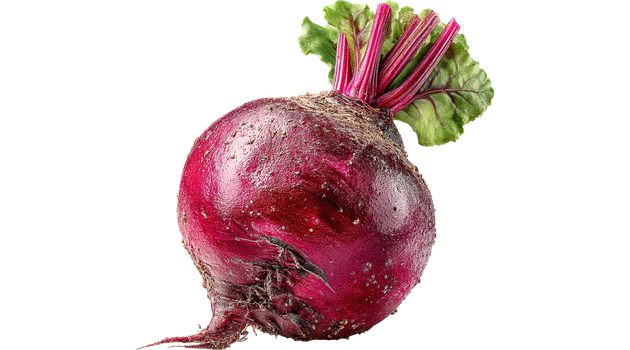
Beetroot as a source of biologically active compounds
The chemical composition of beetroot is complex and depends, among other factors, on the variety, growing conditions, maturity and processing method. The most important compounds associated with its biological potential include:
- inorganic nitrates (NO₃⁻),
- betalains, including betanin,
- phenolic compounds,
- organic acids,
- vitamins and minerals,
- dietary fibre.
From the perspective of research into the properties of beetroot, nitrates and betalains are of particular importance. However, their effects are different, and not all observed effects of beetroot consumption should be attributed to a single specific compound.
Nitrates and Nitric Oxide
One of the best-researched aspects of beetroot consumption is its high nitrate content. In the human body, some nitrates can be converted into nitrites and subsequently into nitric oxide (NO).
Nitric oxide is a signalling molecule involved, among other processes, in the regulation of blood vessel tone. Increased NO availability may lead to vasodilation, which is one of the mechanisms through which nitrates present in beetroot may influence blood pressure.
Clinical studies of beetroot juice have produced interesting results. A 2024 meta-analysis including 11 randomised controlled trials involving 349 people with hypertension found an average reduction in systolic blood pressure of approximately 5.3 mmHg in groups consuming beetroot juice. At the same time, the authors rated the certainty of the evidence as low and indicated moderate to high heterogeneity between the results. No significant effect on diastolic blood pressure or 24-hour blood pressure measurements was found.
This means that the results are promising, but they should not be interpreted as evidence that beetroot can replace treatment for hypertension. Rather, it is an example of the potential effect of a specific dietary component that requires further research.
Beetroot and Physical Activity
Interest in beetroot has also increased in the field of sports nutrition. This is primarily due to its nitrate content and the nitrate → nitrite → nitric oxide pathway.
In theory, increased nitric oxide availability may influence blood flow and the efficiency of processes involved in oxygen utilisation during exercise. For this reason, beetroot juice and beetroot concentrates are being studied in relation to physical performance and exercise capacity.
It should be emphasised, however, that the results of studies concerning physical performance are not entirely consistent. The effect may depend, among other factors, on the type of exercise, nitrate dose, duration of supplementation and individual characteristics.
Therefore, describing beetroot as a "natural performance booster” would be an excessive simplification. A more precise statement is that nitrates derived from beetroot are being studied for their potential effects on exercise physiology.
Betalains – the Characteristic Pigments of Beetroot
The second group of compounds that gives beetroot particular biological significance is betalains. These are water-soluble pigments found primarily in plants belonging to the order Caryophyllales.
They are divided into two main groups:
- betacyanins – responsible for red and purple colours,
- betaxanthins – associated with yellow and orange colours.
One of the most important betalains found in red beetroot is betanin.
Antioxidant Potential
Betalains have the ability to neutralise reactive oxygen species in laboratory studies. Betanin, in particular, has been well studied in this respect. Its properties are related, among other things, to its chemical structure, which enables it to donate electrons and participate in reactions associated with redox balance.
However, it is important to distinguish antioxidant activity observed under laboratory conditions from a clinical effect in humans. The fact that a particular compound effectively neutralises free radicals in an in vitro study does not automatically mean that consuming a given product will produce the same effect in the human body.
This distinction is particularly important in the case of products containing plant extracts.
The Impact of Processing Methods
The properties of beetroot depend not only on its variety but also on how it is prepared. Heat treatment, pH, temperature, storage time and extraction method can affect the stability of betalains and other bioactive compounds.
This is particularly relevant in the case of betanins, whose stability may change depending on environmental conditions. Therefore, the chemical profile of fresh beetroot, juice, concentrate or extract may not be identical.
Beetroot in the Daily Diet
The simplest way to incorporate beetroot is, of course, as part of the daily diet. It can be consumed raw, cooked, roasted or in the form of juice.
Beetroot combines well with other vegetables, whole-grain products, legumes, nuts and fermented dairy products. In this way, it can form part of a varied diet that provides many different groups of nutrients and bioactive compounds.
When consuming beetroot juice, it should be remembered that it has different characteristics from the whole vegetable – it contains considerably less fibre, and the method of preparation may affect the content of individual compounds.
Beetroot and Urine and Stool Colour
Red or pinkish uine after eating beetroot can be surprising, but it is a well-known phenomenon called beeturia. It results from the excretion of compounds associated with betalain metabolism.
Similarly, betalains may temporarily affect stool colour. The appearance of such discolouration after consuming beetroot does not necessarily indicate a health problem.
Does Beetroot Have “Detoxifying” Properties?
Beetroot often appears in materials promoting so-called detox diets. From a scientific perspective, however, caution should be exercised with such claims.
The human body has its own mechanisms for metabolising and eliminating many substances, in which the liver, kidneys, gastrointestinal tract and lungs, among other organs, play key roles. There is no basis for presenting beetroot as a product that "removes toxins” from the body in a non-specific manner.
It is much more appropriate to refer to its nutritional value and content of specific biologically active compounds.

What Does the Current State of Research Show?
The largest body of evidence concerning beetroot relates to the effects of nitrates on the cardiovascular system and the potential role of beetroot in the context of physical exercise. Research on betalains indicates interesting antioxidant and biological potential, but a substantial proportion of the available evidence comes from laboratory or preclinical studies.
It is also important to note that clinical studies often concern beetroot juice or standardised preparations with a specified nitrate content, rather than simply any quantity of cooked beetroot. Therefore, the results of such studies should not automatically be extrapolated to all products containing beetroot.

Summary
Beetroot is a vegetable with an interesting nutritional and phytochemical profile. Its scientific significance is primarily associated with the presence of inorganic nitrates and betalains, as well as other bioactive compounds.
The best-documented area of research concerns the effects of beetroot-derived nitrates on blood pressure and nitric oxide metabolism. There are also studies investigating the use of beetroot in the nutrition of physically active individuals. Betalains, meanwhile, demonstrate significant antioxidant activity in laboratory studies, although their clinical significance in humans requires further research.
Therefore, beetroot is best viewed primarily as a valuable component of a varied diet, with its potential biological properties considered in the context of the overall dietary pattern rather than as the action of a single "superfood”.