 Austria
 Belgium
 Bulgaria
 Croatia
 Cyprus
 Czech Republic
 Denmark
 Estonia
 Finland
 France
 Germany
 Greece
 Hungary
 Ireland
 Italy
Italy
 Latvia
 Lithuania
 Luxembourg
 Malta
Malta
 Netherlands
 Northern Ireland
 Polska
 Portugal
 Romania
 Slovakia
 Slovenia
 Spain
Spain
 Sweden
 United Kingdom
 Pусский (RU)
 Yкраїнська (UA)



Collagen Without the Myths: 7 Things to Know Before Choosing a Supplement
Collagen is currently one of the most popular ingredients in food supplements. It is available in powders, capsules, shots, and sachets, while packaging features terms such as "marine collagen,” "hydrolyzed collagen,” and "collagen peptides.”
However, its popularity has also led to many oversimplifications. Is all collagen the same? What does "hydrolyzed” mean? Is marine collagen better than other types? And why does vitamin C so often appear in collagen products?
Let’s separate the facts from the myths.
1. MYTH: All collagen is the same
Collagen can come from different sources. The market includes, among others, fish collagen, also known as marine collagen, as well as bovine collagen.
Its form can also differ. One option used in supplements is hydrolyzed collagen, meaning collagen that has undergone a hydrolysis process. As a result, large protein molecules are broken down into smaller fragments called peptides.
Therefore, when comparing products, it is worth looking beyond the word "collagen” on the front of the package and checking its source, form, and amount provided in the daily serving.
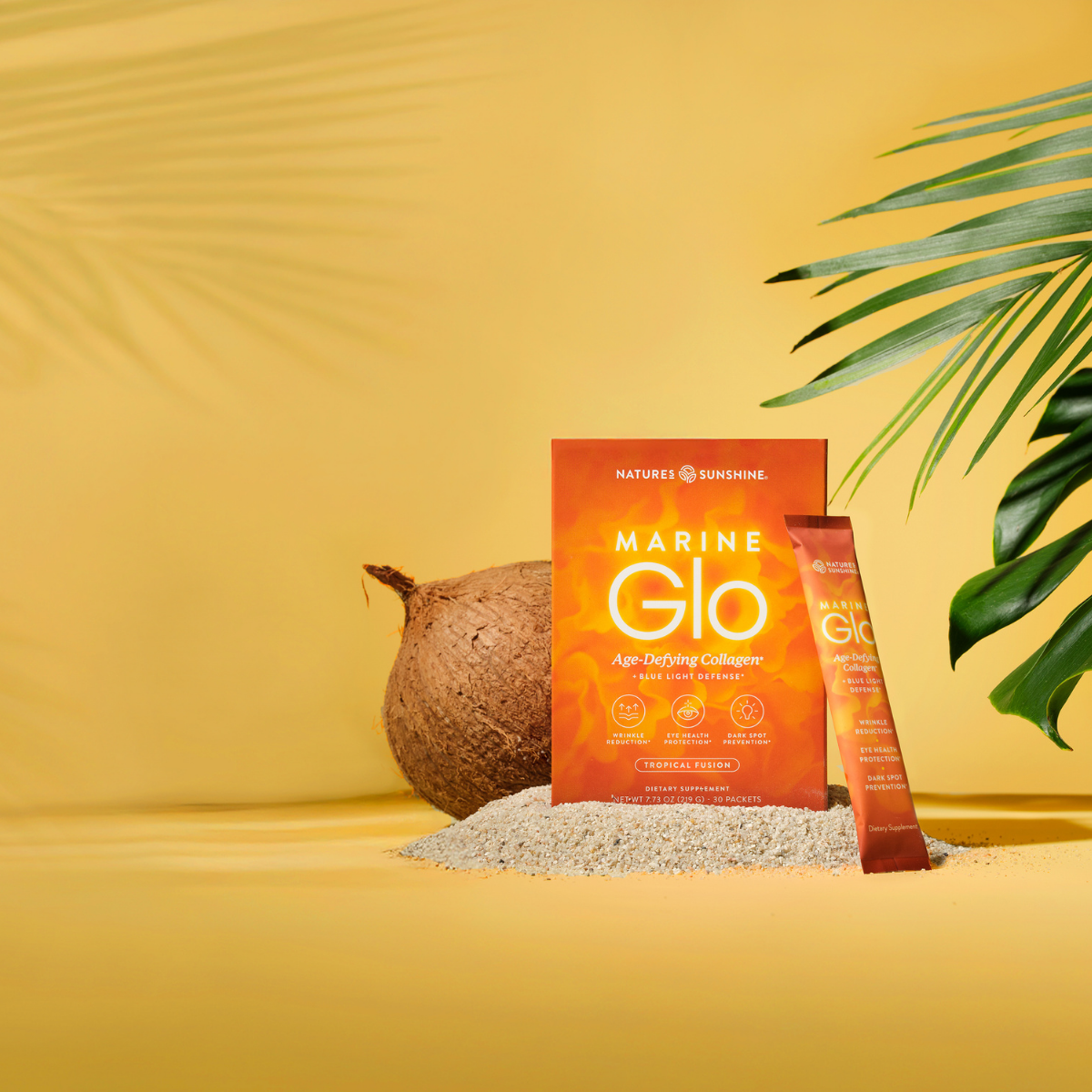
Marine Glo contains hydrolyzed fish collagen – 5 g in one sachet, which constitutes the daily serving of the product.
2. FACT: “Marine collagen” means collagen of marine origin
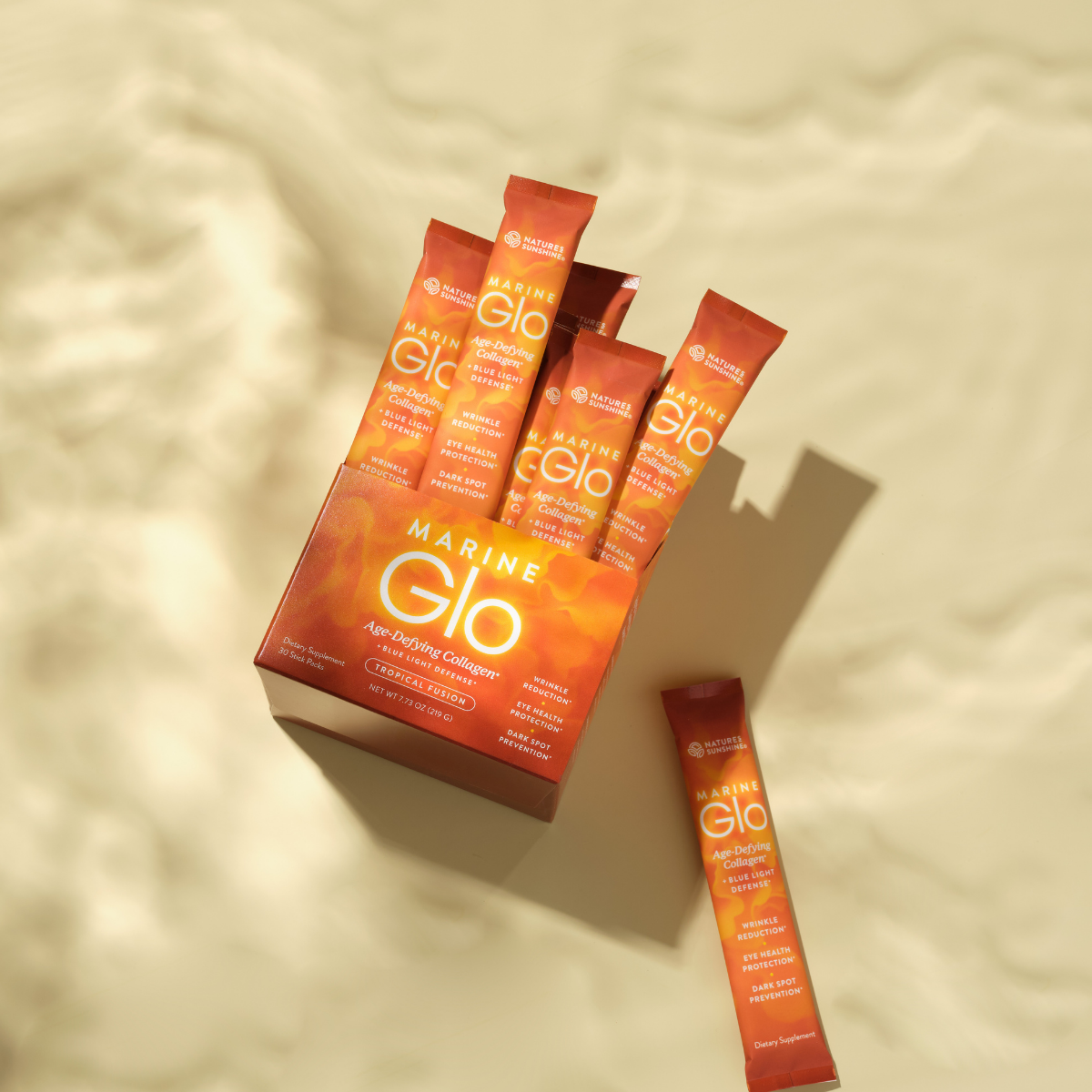
In the case of Marine Glo, the source of the collagen is fish. This is what the term "Marine Collagen” refers to.
However, the word "marine” does not automatically mean that a product is "better” than every other type of collagen. That would be an oversimplification.
The source of collagen is nevertheless important information when making an informed choice – among other things, for people who pay attention to the origin of ingredients and for those with a fish allergy.
3. MYTH: All you need to look at is the number of grams of collagen
The amount of collagen is one of the parameters worth checking, but it is not the only one.
It is a good idea to read the entire active ingredient table. A formula may also contain vitamins, minerals, or other substances.
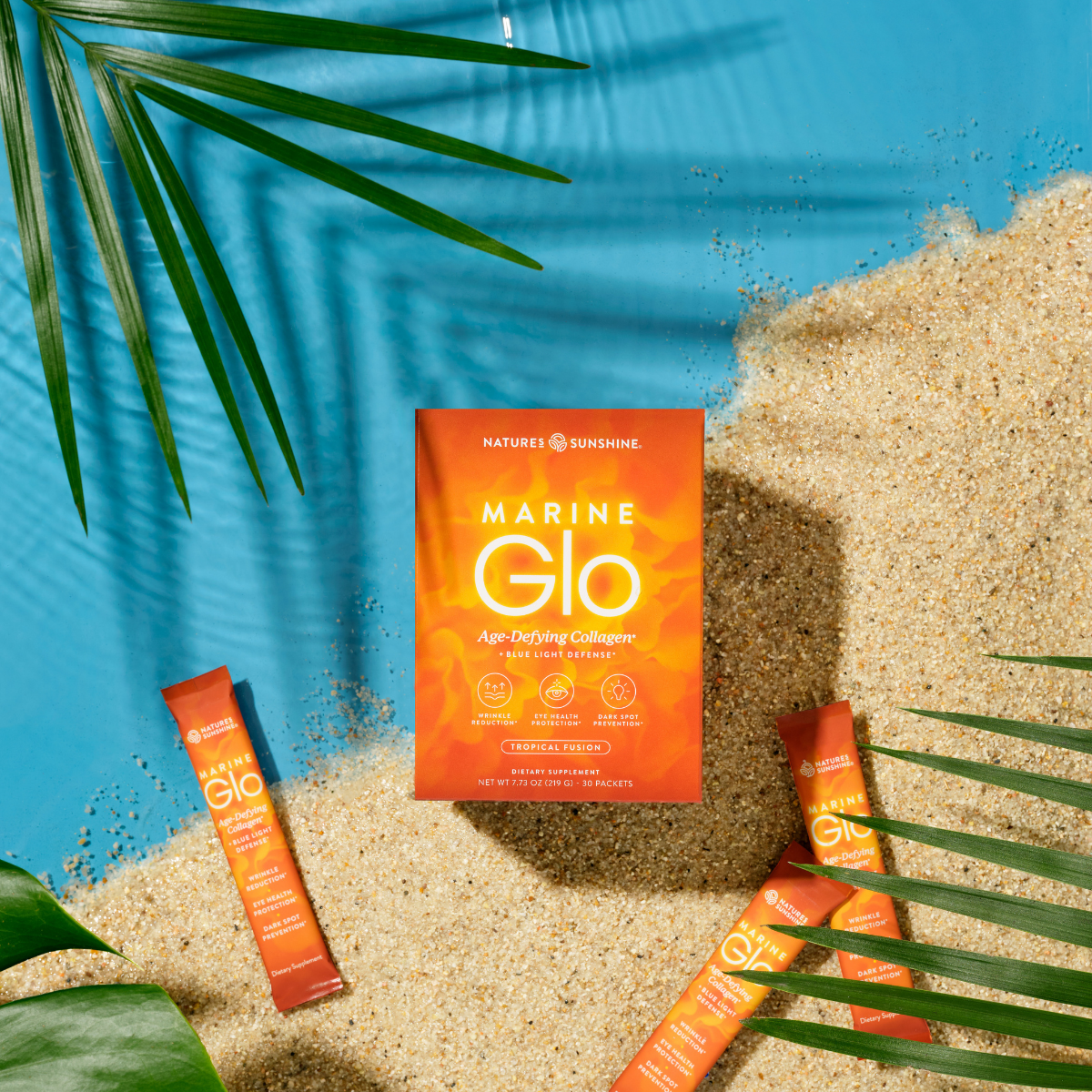
In addition to 5 g of fish collagen, one Marine Glo sachet provides:
- 25 mg of vitamin C – 31% RI,
- 16 mg of niacin – 100% RI,
- 300 µg of biotin – 600% RI,
- 10 mg of FloraGLO® lutein.
The presence of these ingredients allows us to look at the formula more broadly rather than focusing solely on collagen.

4. FACT: Vitamin C plays a role in normal collagen formation
This is one of the things we can talk about very specifically.
Vitamin C contributes to normal collagen formation for the normal function of skin.
It also has a broader role – it contributes to the protection of cells from oxidative stress.
That is why the presence of vitamin C in a collagen-containing formula is not accidental. One Marine Glo sachet provides 25 mg of vitamin C, equivalent to 31% of the Reference Intake.

5. MYTH: If a supplement contains collagen, you can say that it “rejuvenates the skin”
This is a very common shortcut.
When communicating about food supplements, it is important to distinguish between popular promises and what we can actually say about individual ingredients.
In the case of Marine Glo, we can talk, among other things, about biotin and niacin, as both contribute to the maintenance of normal skin. This function is also indicated on the product label.
However, this does not mean that the supplement "removes wrinkles,” "rejuvenates” the skin, or "reverses the aging process.” It is worth being cautious about products making such far-reaching promises.

6. FACT: Skin is about more than just collagen
When we think about supplementation related to the skin, it is easy to focus all our attention on one trendy ingredient. However, it is worth looking at diet and everyday habits much more broadly.
Marine Glo also contains niacin and biotin, which contribute to the maintenance of normal skin. One sachet provides 100% of the RI for niacin and 600% of the RI for biotin.
Vitamin C, meanwhile, contributes to the protection of cells from oxidative stress and – particularly relevant in the context of collagen – contributes to normal collagen formation for the normal function of skin.
This is a good example of why it is worth analyzing the complete composition of a product, rather than focusing only on its most recognizable ingredient.

7. MYTH: A good supplement has to be complicated to use
In practice, even the best-formulated product has little impact if we regularly forget to take it.
That is why, when choosing a supplement, it is also worth considering something very practical: does its format fit into our daily routine?
Marine Glo comes in individual sachets. According to the manufacturer’s recommended use, one sachet should be mixed with 355–473 ml of water and taken once daily. The package contains 30 servings.
The product has a tropical flavor, is sugar-free and gluten-free, and its formula contains no artificial flavors or colors.
So, how can you choose collagen consciously?
Instead of looking for a product with the most impressive promise on the package, it is worth asking a few simple questions.
What is
the source of the collagen?
What form does it come in?
How much is provided in the daily serving?
What else does the formula contain?
Will the recommended format be convenient for me?
In the case of Marine Glo, the answers are specific: 5 g of hydrolyzed fish collagen, alongside vitamin C, niacin, biotin, and FloraGLO® lutein. One sachet provides one daily serving.
There is therefore no need for promises of a "miraculous transformation.” A much better starting point is understanding what is actually in the product and what role its ingredients play.
Marine Glo – Key Information
Marine Glo is a food supplement in sachets with a tropical flavor. One daily serving contains 5 g of hydrolyzed fish collagen, 25 mg of vitamin C, 16 mg of niacin, 300 µg of biotin, and 10 mg of FloraGLO® lutein. The package contains 30 sachets.
Vitamin C contributes to normal collagen formation for the normal function of skin and contributes to the protection of cells from oxidative stress. Biotin and niacin contribute to the maintenance of normal skin.
Food supplement. Contains a sweetener. Do not exceed the recommended daily serving. Food supplements should not be used as a substitute for a varied diet. A balanced diet and a healthy lifestyle are the basis for the proper functioning of the body.