 Austria
 Belgium
 Bulgaria
 Croatia
 Cyprus
 Czech Republic
 Denmark
 Estonia
 Finland
 France
 Germany
 Greece
 Hungary
 Ireland
 Italy
Italy
 Latvia
 Lithuania
 Luxembourg
 Malta
Malta
 Netherlands
 Northern Ireland
 Polska
 Portugal
 Romania
 Slovakia
 Slovenia
 Spain
Spain
 Sweden
 United Kingdom
 Pусский (RU)
 Yкраїнська (UA)





Melatonin and the Circadian Rhythm
The circadian rhythm refers to biological processes that follow an approximately 24-hour cycle. These processes are coordinated by the body's internal biological clock, with the suprachiasmatic nucleus (SCN) of the hypothalamus playing a central role in its regulation.
Light reaching the retina provides information about the external light–dark cycle. This information is transmitted to the brain and contributes to the regulation of the biological clock and the daily pattern of melatonin production.
Under typical conditions, melatonin levels increase during the evening and nighttime and are considerably lower during daylight hours. This characteristic daily pattern makes melatonin an important biological signal associated with nighttime.

Melatonin and Sleep Onset
Melatonin is naturally associated with the transition from daytime to nighttime and with the timing of sleep.
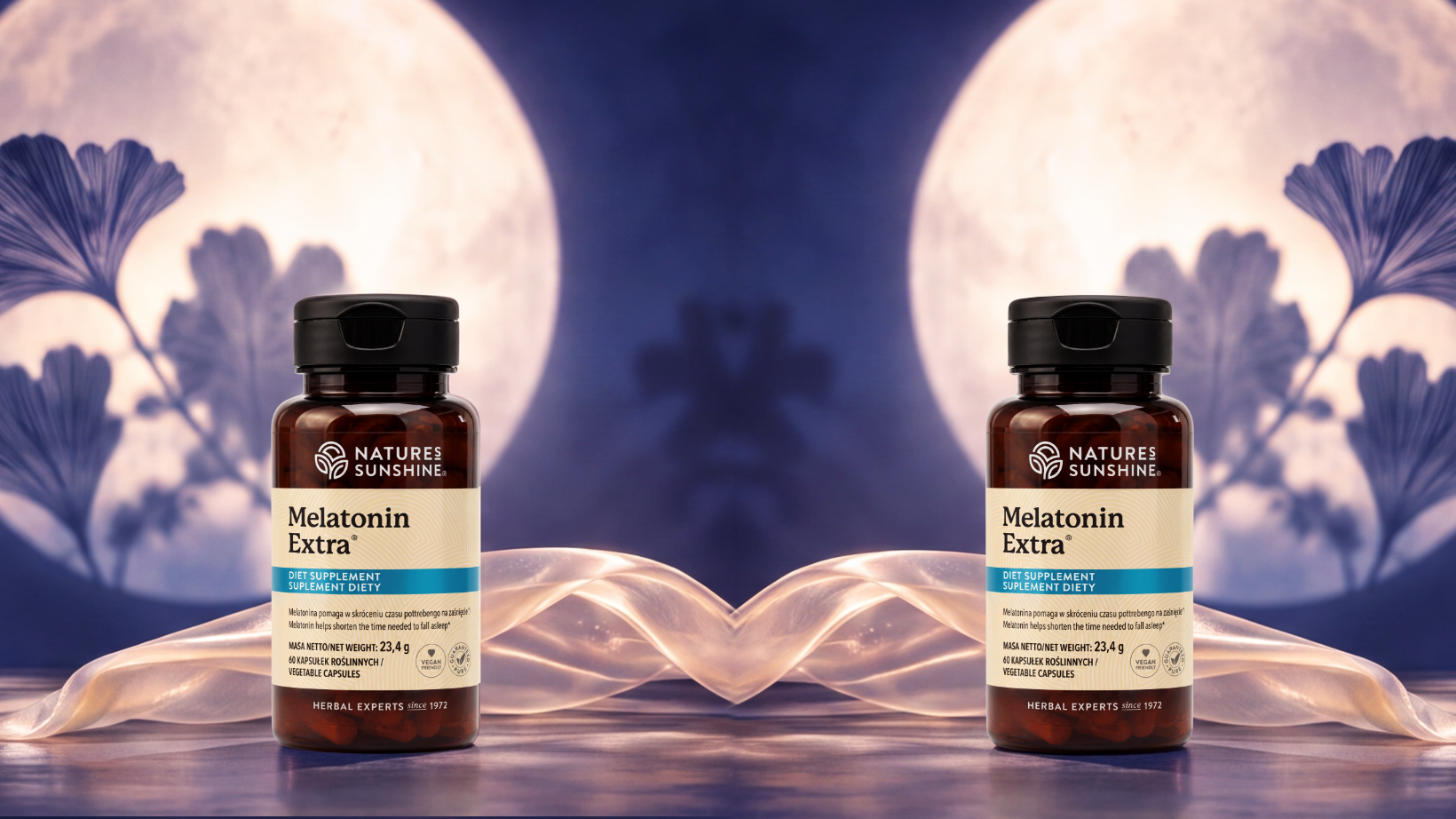
For food supplements containing melatonin, the European Union has authorised a specific health claim concerning the reduction of the time taken to fall asleep. The beneficial effect can be obtained with 1 mg of melatonin taken shortly before bedtime.

Melatonin and Changes in Time Zones
Rapid travel across several time zones can temporarily disturb the alignment between the body's internal biological clock and the local light–dark cycle. This phenomenon is commonly referred to as jet lag.
Melatonin has been investigated in scientific studies concerning the adjustment of circadian rhythms following changes in time zones. Research indicates that the timing of melatonin intake is an important factor when it is used in this context.
When discussing melatonin in relation to travel and changes in time zones, it is therefore important to distinguish between scientific research findings and authorised health claims applicable to food supplements in the European Union.

Why Timing Matters
The daily production of melatonin is influenced by the light–dark cycle and the body's internal biological clock. Consequently, the timing of melatonin intake is an important consideration when discussing its physiological role.
For food supplements, information about melatonin should be presented in accordance with the conditions applicable to authorised health claims and should not imply the prevention, treatment or cure of sleep disorders or other medical conditions.
Summary
Melatonin is a naturally occurring hormone whose production follows a daily rhythm linked to the light–dark cycle. Its levels normally increase during the evening and nighttime and decrease during daylight.
Melatonin is associated with the body's circadian system and the timing of sleep. In the European Union, a specific authorised health claim states that melatonin contributes to the reduction of the time taken to fall asleep, provided that the required condition of use — 1 mg of melatonin shortly before bedtime — is met.